Thursday, June 21, 2018

A QUESTION OF VALUES


Every two years, in the seminary, we have to transfer to a new room assignment. During our transfer, we are asked to make an inventory of our belongings. Recently, while transferring and making a list, I was having difficulty moving to my new room assignment. I had a lot of boxes of stuff with me. I noticed how much clothes I have, which I never wore in the past six months. They were merely there kept in my cabinet. All this time I kept them for I thought they were important. I was wrong. By keeping these clothed I was, in one way or another, depriving others of having something to wear. I started giving some clothes to my brothers, taking only what is essential for me. 


We learn to love whatever we deem important. And we keep them in our rooms, in our life, in our hearts. Ano mang MAHALaga para sa iyo, ay mahal mo. Ano/Sino ang MAHALaga para sa iyo? Ano/Sino ang mahal mo? Sila ang nariyan sa puso mo! Where your treasure is, there your heart is also. Nasaan ang puso mo?

Christ teaches us, in the Gospel (Mt 6:19-23), what matters most in life; treasures that neither moth nor rust corrode, nor thieves break in and steal. These are the heavenly treasures; treasures that last even after we die. Ito ang MAHALaga (These are important). Ito ang mahal (These are precious). Yung iba mura na o minumura natin.

Ano ang mahal para sa iyo? Ano ang mura para sa iyo? Ano ang minamahal mo? Ano ang minumura mo?   

Store heavenly treasures that last forever, more than the earthly treasure that in a second may be gone.  We store earthly treasure when we refuse to spend and rather live miserably because we are afraid we may lose whatever material things we have. We store up earthly treasure when we enjoy material wealth thinking we can't take them anyway. We store up earthly treasures when we think of the legacy we leave behind when we die. Our attitude towards material wealth determines what we value most in this life. We store heavenly treasure when we spend whatever is entrusted to us to help other people. We store heavenly treasure when we enjoy material wealth, not at the expense of others poverty. We store heavenly treasure when we think of the legacy we shall embrace in heaven. Our material wealth is only means and not ends in itself. Don't live your life on earth as if there is no life after it. 


Once there was a priest who died. After his burial, his brothers entered his room to clean it. The only thing they found is a pair of slippers, and few used clothes. Throughout the life of that priest he had given away whatever was entrusted to him; his time spent with people whom he administered to, his talents he used to build the kingdom of God on earth, his resources he shared to the needy. The pair of slippers and few clothes he had left behind were poignant reminders of the thousand memories of selflessness in service of God and others, even to the point of giving everything one's have. Indeed, when we die the only thing that is left to us are the very things we have given away in our lifetime; the joy we spread, the laughter we share, the love we manifest; the very things we deem important in our life; the very things we love most.  

At the gates of heaven, God will not ask us how many mansions we build; how many cars we drove, how many shoes we wore. God will ask us if we have love, if we have rightly love the things entrusted to us, if we have love the persons in our life.

Ano/Sino ang MAHALaga para sa iyo? Ano/Sino ang mahal mo?

Friday, June 15, 2018

WHERE IS GOD?


Where is God? This is one of the questions we ask these days?

In the midst of chaos in our society, in the poverty of many of us whether emotionally or materially, in the convoluting opinions on various issues of life, in doubts and discouraging results of our struggles to live better, we ask the question "Where is God?" When innocent people are killed, when the truth is twisted to conform to once convenience, when goodness is met with hatred, when hope seemed to be replaced by despair, we ask the question "Where is God?" Worse is, some do not anymore look for God, for they have lost their faith in Him.    


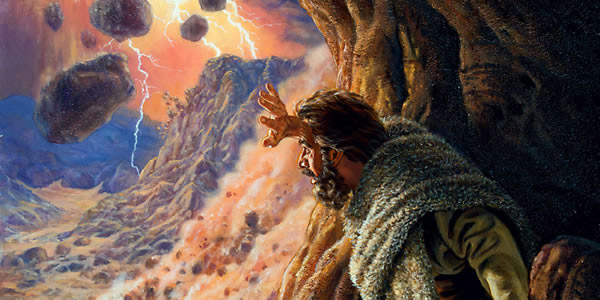
The story of Elijah, in the first Book of Kings, teaches about God's abiding presence in our midst. In the midst of tumults and difficulties in his life as God's prophet, Elijah sought God. He went to Mount Horeb (where Moses met God too). In the mountain of God, Elijah prayed and searched for God in a cave. He searched for Him in strong wind, earthquake, and fire but he did not find God in there. As he remained still and silent, Elijah heard a tiny whispering sound through which God was revealed. In Mt Horeb, Elijah sought for God. By staying still and silent, he heard the whispering sound present all along, covered by the noises in his life. He met the God of wisdom who pointed out to him what he should do, pointed out the wisdom behind the noises in his life. In the gospel (Mt 5:27-32), we meet the same God, not a god of prohibitions, not of DOs and DONT, but the God who teaches us about the wisdom in the way we use our body; the God who shows us the wisdom behind the laws, the wisdom behind our faith.


When our life goes south, whom do we turn to? When a thousand reasons do not suffice for an explanation, whom do we ask? In the midst of noise, personal problems, and struggles, what do we do?

In our difficult situations may we, like Elijah, long to see the face of God in silence and stillness of our hearts. Go to your Mt. Horeb, to a cave in your heart! God will not fail us, for as we seek Him, we shall find God. He will point to us the reasons behind the things we do not understand. We shall meet our wise and loving God, in that cave in your heart, in the midst our silence and stillness.

Where is God? You know where to find Him! You know how to find Him!  

I would like to end this reflection with this beautiful poem by an unknown author.

Be Silent.
Be still.
Alone, Empty
Before God.
Say nothing, Ask nothing.
Let God look upon you.
That is all.
He knows.
He understands.
He loves you with an enormous love.
He only wants to look upon you with His love.
Quiet.
Be still.
Let God love you…

Wednesday, June 13, 2018

LOVE WITHOUT MEASURE


Marami tayong mga bagay na sinusukat. Sinusukat ang mga bewang at timbang para mamonitor ang kalusugan. Sinusukat ang t-shirt upang hindi maging hapit na hapit, dahil hindi lahat ng hapit ay kaakit akit, yung iba kalait lait. Sinusukat ang sapatos bago bilhin ng hindi mabili ang over size at maakusahang fan ni Ronald McDonald. Ang mindset ng pagsusukat ay nadadala rin natin sa ibang aspeto ng ating buhay. Sinusukat ang tagumpay, ang talino, ang kakayahan ng tao sa maraming kaparaanan. At minsan nagagawa rin nating sukatin ang pagmamahal. 
 

Today we celebrate the Solemnity of the Sacred Heart of Jesus. The devotion to the Sacred Heart can be traced back from 11th century as an outgrowth of the devotion on the Passion of Christ and on the Holy Wounds of Christ by the Crusaders returning from Holy Land. The works of St. Bernard of Clairvaux (11th century), and St. Gertrude (12th century) further enriched the devotion. In 1673-1675, in a private revelation, Christ communicated to St. Margaret Mary Alacoque His desire to make known His love for humanity. He said "My Heart is so full of love for men that It can no longer contain the flames of Its burning love. I must discover to men the treasures of My Heart and save them from hell.” Thereafter, the devotion to the Sacred Heart was propagated as we have it today.


Ang natatanging mensahe ng Sagradong Puso ni Hesus ay ang dakilang pagmamahal ng Diyos para sa atin.

Gaano ba tayo kamahal ng Diyos? Paano ba tayo minahal ng Diyos?

In loving us, God uses the greatest measure of love. What is the greatest measure of love? The greatest measure of love is to love without measure (Bernard of Clairvaux). This is how much God loves us; a love that is beyond measure. We are loved beyond measure. Di masukat ang pagmamahal sa atin ng Diyos (1 Timoteo 1:16, Efeso 2:4-9).

What do we do with this love? Christ in his private revelation to St Margaret Mary Alacoque said "Behold the Heart that has so loved men. ...Instead of gratitude, I receive from the greater part (of humankind) only ingratitude." But despite our ingratitude for God's immeasurable love he continues to love us, for God love is not when the lover and the beloved like each other. It’s when one ignores, but the other continues to love till the end (William Shakespeare)." 

Ganito tayo kamahal ng Diyos; pagmamahal na hindi nagtatantsa ng halaga, hindi naghihintay ng kapalit; pagmamahal na di masukat. Ganito rin ang pagmamahal na inaasahan Niya mula sa atin, sapagkat ito ang pagmamahal na ipinagkaloob sa atin ng Sagradong puso ni Hesus.

Ngunit sa ating pagmamahal, kapag nagsimula na tayong magtantsa ng halaga ng ating pagmamahal o maghintay ng kapalit, hindi na tayo nagmamahal. Negosyo na ang tawag doon. When we wait for a return on investment for love we have given away; we begin to measure love. And our acts cease to be acts of charity. We begin to do business. There is no ROI in love.
 
Magmahal tayo nang di masukat na pagmamahal. Love without measure.


We are blessed to celebrate this solemnity in a Eucharistic celebration. The devotion to the Sacred Heart of Jesus is closely linked with the Holy Eucharist that is why we are celebrating it within the octave of Corpus Christi. In the Eucharist, the Sacred Heart of Jesus is made present to us, physically. In many Eucharistic miracles approved by the Church, as in Lanciano, Italy, where the consecrated host appeared as blood and human flesh to the naked eye, the flesh was scientifically proven to be human cardiac tissue. As we receive the Holy Communion, we receive the flesh and blood of the Sacred Heart of Jesus, given to us in love that knows no measure.


May we be grateful for receiving such immeasurable love through the Sacred Heart of Jesus.   

Wednesday, June 6, 2018

GOD'S AWESOME POWER

Most of us dreamt of becoming a superhero having awesome powers. We fantasized about having the capacities to be invisible, time travel, fly, superhuman speed, immortal, control over the four elements of the universe, teleportation, etc. The lists can go on.   

The world today seems to be obsessed with superheroes and superpowers probably because of the super problems that overwhelm us like poverty, criminality and all maladies of the society. 

In the gospel (Mark 11:11-26), Christ showed His tremendous power for His awesome mission. 

In plain words He uttered, a fig tree can wither. He did so not so much because He was hungry as observed by his apostles. Why would He demand fig fruits when it was not yet their season? He did so to demonstrate the enormous power He possesses over the entire creation, after all, He is God. And so if He so desires, in just a flick of a finger He can annihilate all sinful men who never bear desirable fruits for the Father. He could have destroyed in an instance those who had made the Temple impure. With His awesome powers being the God, Christ chose a peculiar way to manifest His power and its very purpose fully. Christ chose the way of the cross. He freely walked into Jerusalem where He embraced His passion and death through the cross. Through the cross, Christ, the powerful who can command a fig tree to wither, hanged. Through the cross, Christ manifested His power fully and fulfilled its purpose. Through the cross, Christ defeated sin and death. 

Through the way of the cross He chose, Christ made manifest His power and defeated man's greatest enemy; sin and death. He did so that he may impart to us great power. Each one of you has received a special grace (1 Pt 4:11); the power of faith in God, the faith that can pull up and throw mountains into the sea; the faith through which nothing is impossible for the Giver, Christ himself, had conquered everything. We the receiver simply ought to believe in His power. 

How often do we rely on God's awesome power? How does our faith in God sustain us? Or do we look for other powers that can fulfill our desires? Do we rely more on our own strength than on Christ's?  Paul says: I can do all things [which He has called me to do] through Him who strengthens and empowers me [to fulfill His purpose—I am self-sufficient in Christ's sufficiency; I am ready for anything and equal to anything through Him who infuses me with inner strength and confident peace. (Philippians 4:13)
    
In our being Christian, do we have any idea the powers we possess? 

With the faith we have received from Christ, we can move mountains; mountains of poverty and misery, mountains of suffering and confusions. We only ought to believe in the ways that Christ chooses for us; for the ways, He wants to manifest in our lives His power. It may be an unbelievable way, undesirable way like that of the way of the cross, but it is God's way.   

As Christians, we do not need to be superheroes. We just ought to believe, to keep the faith in Him, to be faithful in God's awesome power.

Thursday, May 31, 2018

LOVE THAT IS COMMITMENT


Ang pagmamahal ay isa sa mga conceptong din nati lubos maunawa. Upang maunawaan ito, ikinukumpara na lang natin ito sa ibang bagay. 

Gaya halimbawa sa pamasahe sa jeep. Ang pagmamahal parang gaya ng pamassahe sa jeep, minsan di nasusuklian.

Ang love parang ketchup, matamis. Pero maraming nakikisawsaw.

Ang love parang coke. Minsan Zero. Minsan Sakto. Pero kapag ako ang nagmahal, ikaw Mismo walang Kasalo.

Christ teaches us another kind of Love. The love that is commitment; a love that wills the good of the other even if it means giving one's own life for the good of the beloved. This love that is commitment does not only give away time, work, possessions, even your body. It is giving one's very own self for your beloved.

Love that is commitment is contrary to the idea of divorce; the dissolution of bonds between the lover and the beloved. When love demands sacrifice, divorce offers separation at the first instance of difficulties. When love promotes selflessness, divorce endorses self-centeredness. When love upholds faithfulness, divorce introduces disloyalty and inconsistency.

Today there is an impeding bill in the congress that seek to legalize divorce in the country.

Come to think about, di pa man naipapasa ang batas patungkol sa diborsyo we are already doing divorce. Yes. We divorce ourselves from God, every time we separate ourselves from Him by committing sins. We divorce when we become unfaithful in our vows we profess; when we chooses our own wills more than that of our superior, when we choose worldly riches more than evangelical poverty, when we possess a disordered love towards things and persons, we divorce. Every time we betray our baptismal dignity as sons and daughters of God, we divorce.

We do divorce because our hearts have hardened by our selfishness and uncommitted love.

How then should we love? How should we deal with these occasions of divorce?

As Christians we simply ought to love like Jesus; to love that is commitment.

That when we say YES we mean YES. And we say NO, it means NO.

Sa ganitong paraan, maipasa man ang batas sa divorce, it will be useless; for we have learn to love like Jesus, to love that is commitment, even if it mean dying for the good of the beloved.